September 2025 / Q2 FY26
The Tourism Multiplier: How Travel Is Becoming India’s Next Growth Flywheel
“The world is a book, and those who do not travel read only a page.”
Dear Investors,
As we reflect on the September quarter, we are pleased to share that Equitree Capital has continued to deliver strong and consistent performance despite volatility and uneven earnings recovery across the broader market.
Over the past year, Emerging Opportunities PMS delivered a 0.64% return, while the BSE 500 TRI declined by 5.50%[12], resulting in 6.14% alpha. This outperformance becomes even more pronounced over longer periods, reaffirming the strength of our research process, valuation discipline, and portfolio construction.
Our Performance
| Investment Period | 1 Month | 3 Months | 6 Months | 1 Year | 2 Year | 3 Year | 5 Year |
|---|---|---|---|---|---|---|---|
| Equitree’s PMS | 4.88 | -1.61 | 9.02 | 0.64 | 31.29 | 36.46 | 43.41 |
| S&P BSE 500 TRI (Benchmark) | 1.24 | -3.23 | 7.19 | -5.50 | 15.46 | 16.13 | 20.67 |
| NIFTY Small Cap 100 | 1.95 | -7.93 | 9.11 | -8.43 | 17.36 | 22.98 | 24.71 |
| Outperformance (Equitree − BSE 500) | 3.64 | 1.62 | 1.83 | 6.14 | 15.83 | 20.33 | 22.74 |
As of September 30, 2025. Returns are computed on a TWRR basis, net of fees & expenses, and not verified by regulatory authorities.
Returns over one year are compounded annually. Individual portfolio performances may vary.
Benchmark changed to BSE 500 TRI per SEBI circular no: SEBI/HO/IMD-PoD-2/CIR/2022/172 dated 16 Dec’22.
While the Nifty 50 remains near record highs, valuations within mid- and small-caps continue to demand caution. Global uncertainties, tariff discussions, and geopolitical shifts have added short-term noise, yet Q2FY26 earnings have been broadly encouraging. Many of our holdings continue to deliver strong operating results and building earnings visibility that supports our conviction in their long-term compounding potential.
Seeing the Forest and the Trees
At Equitree, investing has always been about patience and perspective. Beyond quarterly numbers, we try to understand the deeper forces shaping the environment in which our companies operate. India’s macro transformation — rising infrastructure intensity, formalization, digital adoption, and a manufacturing revival — forms the soil from which many of our portfolio ideas grow.
This quarter, we focus on one theme that brings this transformation to life: Tourism.
Tourism is not merely about travel or leisure; it is where India’s economic, cultural, and infrastructural stories meet. It reflects how rising incomes, connectivity, and policy intent are translating into enterprise and livelihoods on the ground. In that sense, tourism becomes a lens through which to view India’s evolution from a service-led economy to one driven by aspiration and experience. In this edition, we explore:
- Tourism as a multi-decade economic engine, fueling growth and employment beyond metros.
- The infrastructure and policy backbone that enables this transformation.
- Investment implications through the enabler companies powering this ecosystem.
By stepping back from the micro lens, we hope to highlight how India’s macro momentum is widening the canvas for sustainable, long-term compounding.
Tourism: A Multi-Decadal Opportunity
Travel and tourism are among the world’s most dynamic industries, driving growth, employment, and cultural exchange on a global scale. In India, the sector contributes ~6.6% of GDP as of 2024[1], fostering infrastructure development, enabling millions of livelihoods, and supporting local communities through crafts, homestays, and small enterprises.
The industry was among the hardest hit during the pandemic, with its GDP contribution plunging from 5.2% in 2020 to 1.5% in 2021. Yet, its comeback has been remarkable. By 2024, tourism’s share in GDP had rebounded to above pre-pandemic levels, driven by a sharp resurgence in both domestic travel and international arrivals.
Tourism share in GDP (in %)
Tourism share of GDP
Source: Ministry of Tourism.
Tourist Visits Recovery (mn)
Left axis: domestic (mn) · Right axis: international (mn)
Domestic (mn)
International (mn)
Source: Ministry of Tourism.
As the recovery matures, a shift in younger consumer behavior is reshaping tourism demand. Post-pandemic travelers increasingly seek new destinations, authentic experiences, and digital convenience over material consumption. This “experience-first” mindset has created sustained discretionary spending, transforming tourism from a cyclical industry into a long-term growth engine[2].
Behavioral Shifts Driving Structural Growth in Tourism
Gen Z & Millennials
Older Generations
Source: World Travel & Tourism Council (WTTC); Booking.com GenZ Travel Report 2024.
A Glimpse of Transformation: Lessons from Tadoba
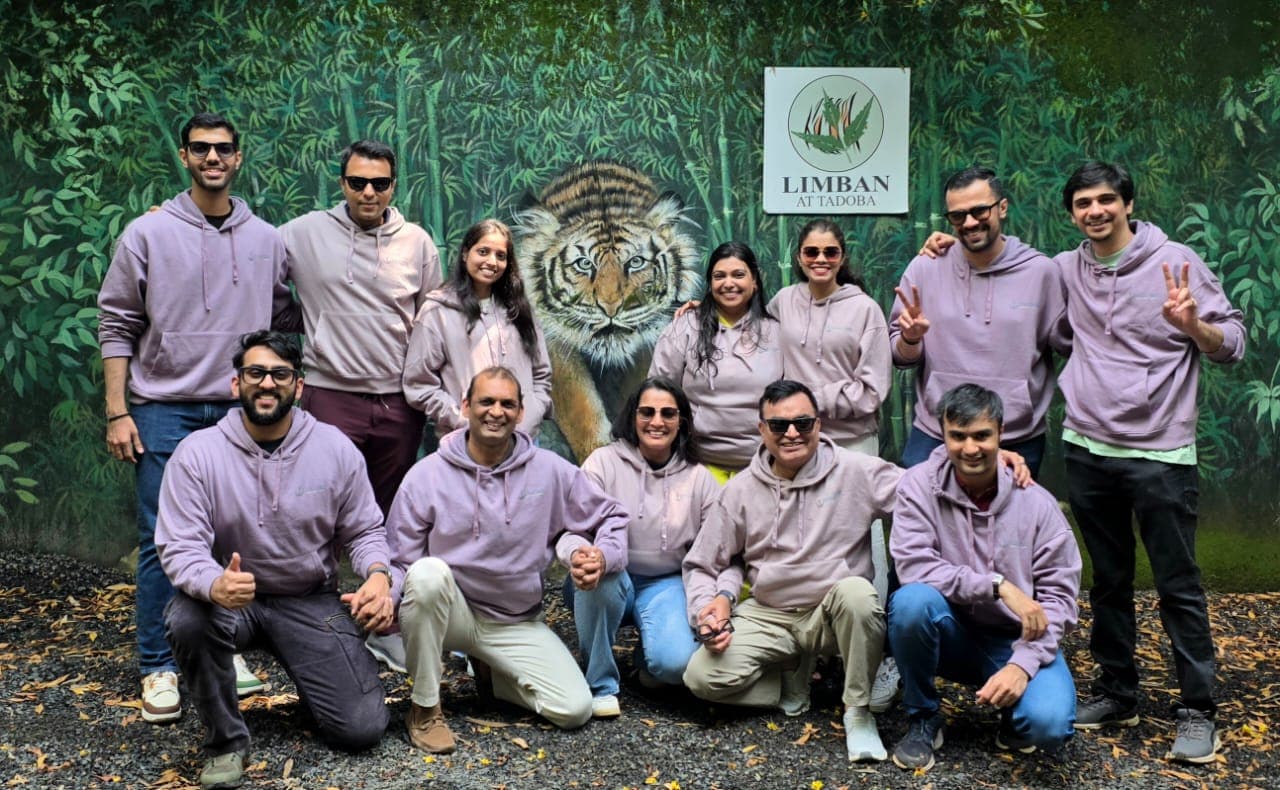
Our recent Equitree offsite to Tadoba Tiger Reserve offered more than a change of scenery; it was a window into India’s quiet, ground-level transformation. Once a remote forest corridor known only to naturalists and locals, Tadoba has evolved into a thriving tourism ecosystem that blends conservation, community, and enterprise. The drive from Nagpur, once rough and time-consuming, now feels seamless: a quiet reminder that real progress often begins with connectivity.
What stood out was how naturally policy meets people. Well-planned routes, reliable electricity, and strong network coverage have improved access without eroding authenticity. Local villagers who once depended on farming now run lodges, guide safaris, and sell crafts with pride. Tourism here is not just travel; it is participation — creating livelihoods while preserving the landscape that sustains them.
Tadoba showed us that growth is no longer confined to cities; it is unfolding across rural India, powered by infrastructure, technology, and aspiration. What makes this shift especially unique is India’s strong domestic tourism base — a steady engine that cushions global shocks and keeps demand consistent. Unlike destinations reliant on foreign arrivals, India’s internal travel economy ensures that development reaches the grassroots. Tourism, in that sense, makes progress visible: turning policy into participation and growth into prosperity.
Looking Ahead
India’s tourism transformation is still in its early stages. The sector’s share of GDP is projected to rise from 6.6% in 2024 to 11–12% by 2030, powered by two key engines — rising domestic mobility and increasing international arrivals. Continued government focus on infrastructure, sustainability, and skill development is turning tourism into one of India’s most inclusive growth frontiers, creating jobs and spreading opportunity to the grassroots.
To understand this expanding impact, tourism can be viewed through three lenses:
1. Multiplier Effect — spending that ripples through local economies to generate employment
2. Infrastructure Development — investments that enhance connectivity and competitiveness
3. Policy Support — reforms and funding that sustain long-term momentum
Together, these pillars are transforming tourism from a leisure activity into a driver of inclusive growth, creating livelihoods and strengthening India’s economic foundation.
1. Multiplier Effect
Tourism’s true power lies in its multiplier effect — the way one traveler’s spending sets off a chain of income, employment, and opportunity that ripples through the economy. Every rupee spent on travel passes through hotels, restaurants, transport, handicrafts, and entertainment, sustaining livelihoods from luxury resorts to rural markets.
A single hotel booking sustains chefs, suppliers, and cleaners. A taxi ride supports mechanics and fuel vendors. A souvenir purchase keeps local artisans employed. This circular flow transforms visitor spending into community prosperity, turning tourism from an industry into an economic ecosystem — where growth and opportunity travel as freely as people do.
In India, this ecosystem now supports over 85 million direct and indirect jobs, contributing nearly 13% of total employment as of 2024 — surpassing its pre-pandemic peak of 76 million. The recovery, shown in the chart below, underscores the resilience of domestic demand and the strength of India’s consumption-driven economy. More importantly, it highlights tourism’s role as one of India’s most inclusive engines of growth, where value creation extends from boardrooms to bazaars.
Jobs Creation — Direct & Indirect Tourism Employment (mn)
Tourism employment (mn)
Source: Ministry of Tourism.
Tourism’s impact runs deep and wide. It connects large industries like hotels, airlines, and logistics with local guides, artisans, and homestay owners — turning travel into livelihoods. As infrastructure, digital access, and policy support continue to expand, this ripple effect will only intensify, turning every journey into a force for opportunity, inclusion, and progress.
2. Infrastructure Development
Tourism and infrastructure share a virtuous relationship. Every new highway, airport, or rail line not only connects destinations but also unlocks economic participation for the communities along the way. In India, this connection has become especially powerful. Over the past decade, India’s build-out of transport and civic networks has quietly reshaped how people travel, work, and consume, turning infrastructure into the backbone of tourism-led development.
Airports
The transformation of India’s aviation network has been one of the clearest illustrations of inclusive growth in motion. The number of operational airports has more than doubled from 74 in 2014 to 158 in 2024, and is projected to reach 210 by 2030[4]. The UDAN (Ude Desh ka Aam Nagrik) scheme has been pivotal in democratizing air travel, bringing affordable connectivity to smaller towns and regional hubs. This expansion has done more than move people — it has opened new markets, created thousands of service jobs, and drawn investment into hospitality, logistics, and allied services. Each new airport acts as an economic nucleus, radiating enterprise and employment across its catchment region.
Growth in Airports (2014 – 2030E)
~6.5% CAGR over the past decade, with the runway extending through 2030
Source: Ministry of Tourism.
Railways
India’s railways — the traditional backbone of domestic travel — are undergoing a parallel modernization that blends heritage with technology. Over 1,300 stations are being redeveloped with world-class passenger amenities, while the Vande Bharat network (100+ operational) now links major tourist circuits with high-speed comfort[6].
Nearly 99% of the 69,512 km broad-gauge network has been electrified, significantly improving efficiency and sustainability. At the same time, metro connectivity has expanded from 248 km across 5 cities in 2014 to 945 km across 21 cities in 2024, with another 919 km under construction across 26 more cities[7]. These advancements extend tourism’s reach far beyond metros — reviving easy access to destinations that remain central to India’s travel economy.
Rail Network Electrification (km)
~11% CAGR — from 21,801 km in 2014 to 68,791 km in 2024
Source: Ministry of Tourism.
Roads & Highways
If airports and railways form the skeleton of connectivity, roads are the arteries that bring tourism to life. The National Highway network has expanded by over 60% in the past decade, from 91,000 km in 2014 to 1,46,000 km today, while rural roads have nearly doubled to 7.55 lakh km. Under the Bharatmala Pariyojana, more than 15,500 km of new highways have been developed, connecting economic centers with cultural and natural destinations across the country[5].
Iconic projects underscore this transformation. The Atal Tunnel in Himachal Pradesh has turned Lahaul-Spiti from an isolated valley into a year-round tourist destination. The Delhi–Mumbai Expressway, one of the world’s longest, is redefining interstate mobility and regional commerce. In Gujarat, the ₹980 crore Sudarshan Setu Bridge — linking Okha to Beyt Dwarka — combines engineering prowess with spiritual tourism. And along the coasts, the Char Dham and Coastal Road projects are unlocking access to pilgrimage circuits and leisure destinations alike.
Hotels & Restaurants
Connectivity may bring travelers to destinations, but hospitality ensures they stay, spend, and revisit. The hotels and restaurants sector has become the experiential backbone of India’s tourism economy, translating mobility into meaningful value. In 2024, India’s hotel industry crossed 200,000 branded rooms, nearly doubling capacity over the past decade. Occupancy rates have rebounded to ~67% in FY24 from 33% in FY21, reflecting the strength of domestic travel[9].
Growth is now accelerating beyond metros. Tier-2 and Tier-3 cities such as Varanasi, Amritsar, Coimbatore, and Shillong are emerging as new hospitality hubs, powered by better connectivity and the rise of cultural and eco-tourism. Domestic chains like Lemon Tree and ITC Hotels are expanding aggressively, while global players such as Marriott, Hilton, and Hyatt are deepening their presence across leisure and spiritual circuits, including Rishikesh, Dwarka, and Ayodhya.
The restaurant and food services industry, now valued at ₹5.5 trillion, mirrors this trend. Organized dining chains and QSRs are formalizing the space, while regional cuisines and local eateries continue to anchor India’s culinary identity. The sector directly employs 8 million people, with another 12 million supported indirectly across supply chains[10].
India’s infrastructure build-out over the past decade has done more than connect places — it has connected people to opportunity[8]. From airports and railways to roads and hospitality, each investment has multiplied access, jobs, and enterprise, boosting employment. As connectivity deepens and quality of experience rises, infrastructure is no longer just the foundation of tourism — it is the bridge between aspiration and growth.
3. Policy Push
Behind every visible milestone in India’s tourism story lies a decade of deliberate policy design. From the highways that connect pilgrim circuits to the airports linking tier-2 cities, much of this transformation has been guided, not accidental. The government’s consistent policy vision has quietly turned tourism from a fragmented activity into a structured growth engine.
Recognizing tourism’s potential as a catalyst for employment and regional prosperity, the government has launched a series of flagship programs to build sustainable, high-quality infrastructure (see table below). Complementing these are broader schemes like UDAN, which has democratized regional air travel, and Dekho Apna Desh, which has revived domestic exploration — together forming a policy ecosystem driving India’s next decade of tourism-led growth[11].
| Key Schemes / Initiatives | Objective |
|---|---|
| Swadesh Darshan | Develops theme-based tourist circuits (Buddhist, Desert, Himalayan, etc.). Over 76 projects worth ₹5,000+ crore sanctioned. Now upgraded to Swadesh Darshan 2.0, focused on sustainable and responsible tourism. |
| PRASHAD Scheme | (Pilgrimage Rejuvenation and Spiritual Heritage Augmentation Drive). Enhances facilities and visitor experience at pilgrimage and heritage sites. Over 70 projects worth ₹3,000+ crore approved. |
| SASCI | (Special Assistance to States for Capital Investment). Provides financial support for large tourism infrastructure projects. In FY24, ₹2,400 crore allocated to strengthen roads, amenities, and tourism facilities. |
Source: Ministry of Tourism.
Beneficiaries & Investment Opportunities
Tourism’s expansion fuels an extensive ecosystem of beneficiaries. Direct participants — airlines, online travel agencies, hotels, restaurants, ticketing platforms, and luggage manufacturers — capture the immediate surge in travel demand. Indirect enablers such as railway and auto ancillaries, road developers, construction material suppliers, and digital platforms benefit from the second-order effects of rising mobility, consumption, and infrastructure investment.
The strength of this multiplier is visible in India’s corporate landscape. Safari Industries has seen luggage sales and market capitalization multiply alongside the surge in domestic tourism, while InterGlobe Aviation (IndiGo) has rapidly expanded its fleet and network to meet one of the world’s fastest-growing air travel markets[13]. These examples highlight how tourism’s growth cascades through consumption, logistics, and infrastructure value chains.
However, while such companies exemplify the opportunity, many trade at valuations beyond our comfort zone. At Equitree, we prefer to participate through indirect enablers that form the backbone of this transformation — businesses that quietly sustain growth with more favorable risk-reward profiles.
As rising tourist traffic accelerates the need for connectivity, road and highway investments are benefiting our portfolio exposure to a leading bitumen supplier supporting nationwide construction. Similarly, the rollout of Vande Bharat trains has driven adoption of advanced safety systems like Kavach, where we are invested in a specialized electronics company pioneering this shift.
Through such holdings, our portfolio participates in India’s multi-decade tourism opportunity, focusing on infrastructure and technology enablers that align with our long-term philosophy of valuation discipline, quality, and compounding.
Case Study: Maha Kumbh 2025 — A Testament to India’s Tourism Multiplier Effect
Few events capture the scale and spirit of India’s tourism economy like the Maha Kumbh 2025 at Prayagraj — the world’s largest spiritual gathering, attended by over 66 crore visitors. Beyond its cultural and religious significance, it became a vivid demonstration of the tourism multiplier in motion. The event unleashed an unprecedented wave of economic activity across accommodation, food, transport, rituals, and souvenirs. Direct spending lifted hotels, eateries, and local transporters, while indirect gains reached suppliers of construction materials, logistics providers, and artisans. Induced effects followed as workers and small business owners reinvested their earnings into local markets, further amplifying regional consumption.
Studies estimate the Maha Kumbh generated over ₹2.8 trillion in economic output, creating nearly 800,000 jobs across hospitality, retail, and allied sectors[3]. Yet, its most enduring impact extends beyond the fortnight of festivities. Large-scale investments in roads, bridges, sanitation, utilities, and digital infrastructure ensured seamless mobility and safety for millions of visitors each day. These upgrades have permanently strengthened Prayagraj’s infrastructure and service ecosystem — leaving behind a model of how tourism, when planned strategically, can become a catalyst for development.
At Equitree, we view this as a microcosm of India’s broader transformation, where policy, infrastructure, and culture converge to create lasting economic value. The success of large-scale spiritual and experiential initiatives highlights how tourism is becoming a powerful engine of inclusive growth:
| Key Parameters | Ayodhya | Statue of Unity | Mahakal Lok Corridor | Kashi Vishwanath Corridor |
|---|---|---|---|---|
| Connectivity & Infrastructure | ✓ | ✓ | ✓ | ✓ |
| Tourist Amenities | ✓ | ✓ | ✓ | ✓ |
| Year-Round Tourist Flow | ✓ | ✗ | ✓ | ✓ |
| Local Economic Impact | ✓ | ✓ | ✓ | ✓ |
| Employment Generation | ✓ | ✓ | ✓ | ✓ |
| International Tourist Appeal | ✓ | ✓ | ✗ | ✓ |
Source: Ministry of Tourism, Industry Reports, Equitree Research.
India’s tourism story is no longer confined to leisure or pilgrimage; it has evolved into a structural engine that blends culture, commerce, and community upliftment. Each corridor built, each event hosted, and each destination revived feeds into a broader national flywheel of infrastructure creation, employment generation, and consumption-led prosperity.
What began as faith-driven travel is now catalyzing modern urban development and regional entrepreneurship. For investors, this convergence of heritage and modernization represents a multi-decade opportunity, as India continues to transform its cultural capital into economic capital — one destination at a time.
Market Kya Lagta Hai? — Our Two Bits on the Street
Periods of consolidation like the one we are in today often test patience, but they also reward preparation. Over the past quarter, we have used this volatility to steadily build positions in businesses where execution remains strong and fundamentals are strengthening beneath the surface. We have not felt the need to chase new ideas or overextend risk. Instead, our approach has been to scale within conviction — in companies that continue to compound value despite market noise.
Valuations in certain parts of the market remain stretched, but within our universe of small and micro caps (<₹5,000 crore market cap), we continue to find selective opportunities with favorable risk-reward profiles. Our staggered deployment strategy has helped us navigate corrections and take advantage of dislocations, allowing fresh capital and top-ups to enter portfolios at better levels. Meanwhile, underlying business performance has remained steady, with most portfolio companies trading at or below their 10-year median valuations, offering both margin of safety and upside potential.
The broader backdrop remains fluid. Trade discussions and geopolitical shifts could create short-term uncertainty, but India’s domestic drivers — manufacturing, infrastructure, and formalization — remain firmly in motion. We expect greater clarity on trade and tariffs by the end of the calendar year, which should help normalize sentiment. Our focus, however, remains unchanged: owning well-managed, cash-generative businesses that can grow earnings 25–30% annually, irrespective of near-term macro noise.
We are neither exuberant nor defensive — just deliberate. Our job is not to predict the market’s next move but to position ourselves for the inevitable compounding of value that occurs when execution meets patience. The portfolio trades at a median P/E of ~16x FY26E earnings and a PEG of 0.6, giving us the conviction to stay invested even through volatility[14].
As investors, we often talk about cycles — valuation cycles, liquidity cycles, business cycles. But in the end, all compounding is a function of discipline and time. India’s structural transformation continues to broaden in depth and diversity, and we believe the best returns will accrue to those who can stay aligned with its long arc of opportunity.
At Equitree, our philosophy remains constant: seek value where growth is sustainable, invest with prudence, and let patience do the heavy lifting.
As always, we would be happy to connect and discuss further.
Sources
- 01
Ministry of Tourism, Government of India (2024–2025). India Tourism Statistics; Annual Report on Tourism’s Contribution to GDP and Employment; Swadesh Darshan 2.0 and PRASHAD Scheme documents; SASCI notes.
- 02
World Travel & Tourism Council (WTTC) (2024–2025). Travel & Tourism Economic Impact: India and Global Results.
- 03
Government of Uttar Pradesh, Department of Tourism / NCAER / EY / Deloitte (2025). Maha Kumbh 2025 Economic Impact Assessment (visitor count, output, employment).
- 04
Ministry of Civil Aviation (MoCA), Airports Authority of India (AAI), and DGCA (2024–2025). UDAN updates, Airport Development Status, and Passenger & Traffic Statistics.
- 05
Ministry of Road Transport & Highways (MoRTH) (2024–2025). Basic Road Statistics of India; Bharatmala Pariyojana status reports.
- 06
Indian Railways (2024–2025). Station Redevelopment Mission; Vande Bharat Operations; Network Electrification Status.
- 07
Ministry of Housing & Urban Affairs (MoHUA) (2024–2025). Metro Rail Statistics and Urban Rail Updates.
- 08
National Infrastructure Pipeline (NIP), Ministry of Finance (2024–2025). NIP Dashboard and Updates.
- 09
HVS Anarock / Hotelivate (2024–2025). India Hotel Market Review / Trends & Outlook (branded rooms, ADR, occupancy, pipeline).
- 10
FHRAI and NRAI (2024–2025). Hotels and Restaurants Sector Size and Employment Reports.
- 11
Press Information Bureau (PIB) and DPIIT (2020–2025). PLI Notifications, Sector Updates, Make in India and Aatmanirbhar Bharat summaries.
- 12
S&P BSE Indices and NSE Indices (2024–2025). Index Fact Sheets and TRI Data.
- 13
Company Disclosures — Safari Industries and InterGlobe Aviation (IndiGo) (2024–2025). Annual Reports and Investor Presentations.
- 14
Equitree Capital (2025). Internal Research and Sectoral Analysis.
Disclaimer
This newsletter is prepared by Equitree Capital for informational purposes only and is directed at existing investors of its Portfolio Management Services. It does not constitute investment advice, an offer, or a solicitation to buy or sell any securities.
Past performance is not indicative of future results. Returns are computed on a TWRR basis, net of fees and expenses, and are not verified by any regulatory authority. Individual portfolio performances may vary. Forward-looking statements are subject to risks and assumptions that may not materialise.
Investments in small- and micro-cap equities carry higher volatility, liquidity, and business-specific risks, including the possible loss of principal. Equitree Capital is a SEBI-registered Portfolio Manager. Recipients should consult their independent financial, legal, and tax advisors before making any investment decisions.
This document is private and confidential. It may not be reproduced, redistributed, or published, in whole or in part, without the prior written consent of Equitree Capital.
Equitree Capital Advisors Private Limited